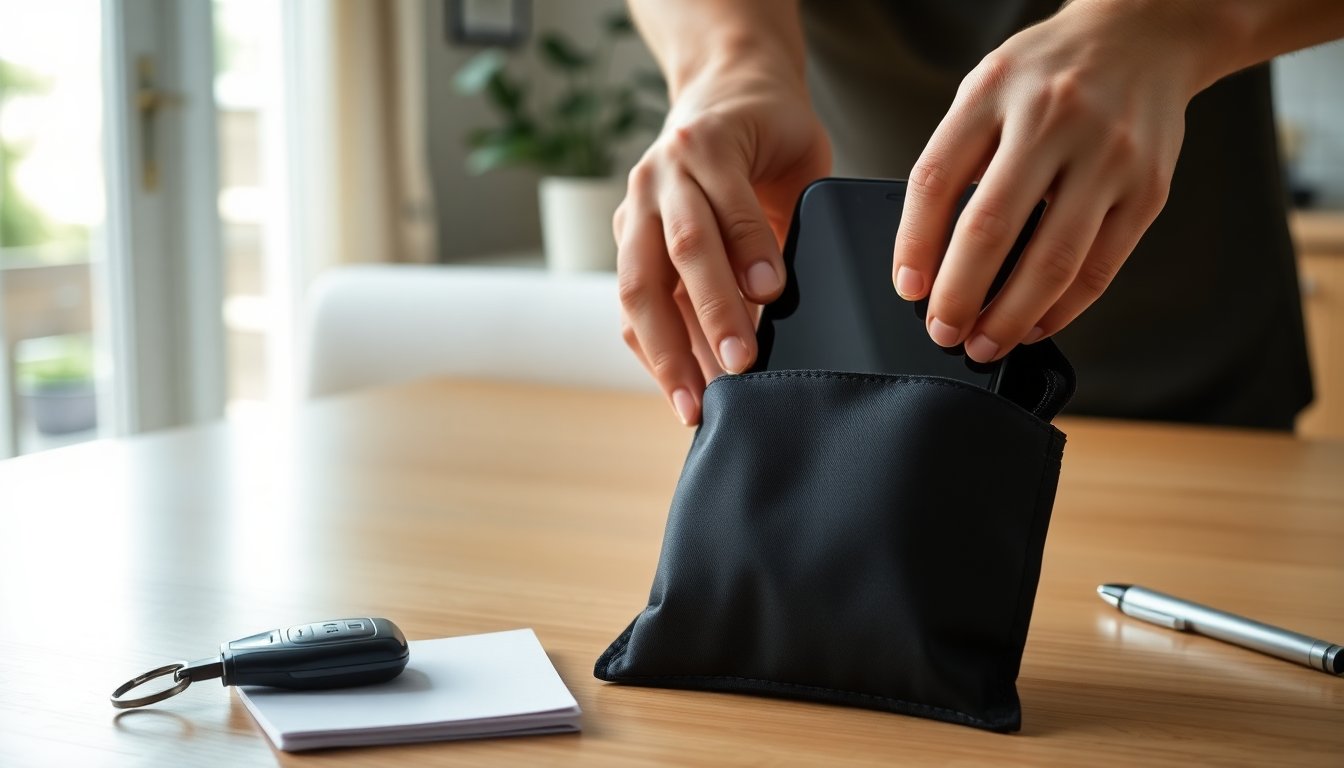
Yes, Faraday bags do block many wireless signals when they’re made from continuous conductive material and used correctly. They create a shield that prevents radio-frequency (RF) waves from reaching the device inside, which helps with privacy, forensic preservation, and theft-mitigation scenarios. Practical effectiveness depends on construction, seams, closures, and the signal strength trying to penetrate the bag.
Quick Facts:
- Faraday bags rely on conductive layers (metal mesh or foil) to reflect or absorb RF energy.
- They can block common bands: cellular, Wi‑Fi, Bluetooth, and GPS when properly sealed.
- Weak seams, damaged liners, or powered-on nearby transmitters can let signals through.
- Testing with multiple bands and real devices is the only reliable way to confirm performance.
Key Takeaways
- Faraday bags work by using continuous conductive materials to block wireless signals like cellular, Wi-Fi, Bluetooth, and GPS when properly sealed.
- The effectiveness of a Faraday bag depends on its construction quality, including seams and closures, as even small gaps can allow signal penetration.
- Testing a Faraday bag with multiple devices and signal types is essential to confirm its shielding performance before relying on it for privacy or security.
- Faraday bags are valuable for privacy protection, forensic evidence preservation, and preventing relay attacks on car key fobs when combined with additional security measures.
- Maintenance is crucial: avoid damage to the conductive layers and inspect bags regularly to ensure they maintain their signal-blocking ability.
- For enhanced security, Faraday bags should be used alongside strong passwords, encryption, and physical safeguards to build a layered defense.
How Faraday Bags Work: The Science In Plain English
At its core a Faraday bag is a portable version of a Faraday cage: a continuous conductive shell that redistributes incoming electromagnetic (EM) fields so the interior stays largely field-free. When RF waves hit the conductive material, currents induced in that material create opposing fields that cancel the incoming wave inside the enclosure.
Two practical points matter most: the conductivity and the continuity of the shield. Conductive fabrics, foil layers, or metal meshes do the blocking, but any gaps, pinholes, or poorly sealed closures break continuity and allow leakage. Frequency matters too: very low-frequency fields penetrate differently than the high-frequency bands used by phones, so bag design is tailored to common device bands (hundreds of MHz to a few GHz).
Can Faraday Bags Block All Signals? Limits And Threat Models
Faraday bags can block many, but not all, signals. They’re effective against line-of-sight and near-field transmissions in the cellular, Wi‑Fi, Bluetooth, and GPS bands if the bag is intact and properly closed. But limitations exist:
- Edge and seam leakage from imperfect closures.
- Strong nearby transmitters or powered high-gain antennas can overwhelm imperfect shielding.
- Active attacks that use physical access (e.g., direct tampering) bypass RF defenses.
- Some forensic tools exploit power or wired interfaces that a bag doesn’t address.
Assess threats by asking whether the adversary uses remote RF, local physical access, or forensic extraction, Faraday bags handle the first best, help a bit with the second, and do little for the third.
Common Tests And Real-World Performance
Simple tests reveal typical performance: put a powered phone with cellular and Wi‑Fi on inside the bag and try calling it or pinging it. A properly engineered bag will prevent call setup, block ping responses, and stop GPS fixes. Real-world performance varies, many consumer bags pass single-band tests but fail multi-band checks or degrade after wear. Law‑enforcement and forensic teams typically use certified shielding pouches and validate them with spectrum analyzers: consumers should at least test across multiple bands with different devices.
Practical Uses: Privacy, Forensics, And Theft Prevention
Faraday bags serve a few common, practical roles:
- Privacy: Prevents tracking or remote wiping by isolating a phone from networks.
- Forensics: Preserves device state and prevents remote tampering during evidence handling.
- Theft prevention: Blocks relay attacks against keyless car fobs and stops thieves from using signal extenders.
They’re not a universal solution, users should pair bags with strong passwords, device encryption, and secure storage. For car key fobs, a Faraday pouch is a low-cost countermeasure that often prevents relay attacks, but it must fully enclose the fob and remain undamaged to be effective.
How To Choose And Test A Reliable Faraday Bag
Choose a bag that lists shielding effectiveness across relevant bands and uses multi-layer conductive material (metalized fabric + foil). Look for tested attenuation values (dB reduction) when available and for strong closures, overlapping flaps or zipper seals designed for RF shielding.
To test a bag yourself:
- Place a powered phone with cellular and Wi‑Fi on inside the sealed bag. Ask someone to call or message it.
- Try GPS location apps to see if a fix occurs.
- Test a car key fob outside vs. inside the pouch at a short distance.
If signals still pass, the bag isn’t providing sufficient attenuation. Repeat tests across devices and bands for confidence.
Maintenance, Common Failures, And Practical Tips
Maintenance extends a bag’s life: avoid sharp bends, keep it dry, and inspect seams or liners for wear. Common failures include frayed conductive fabric, torn liners, and degraded closures. Practical tips:
- Rotate bags used daily and replace if shielding integrity is doubtful.
- Keep contact points (phones, fobs) away from metal objects that can breach the seal.
- Store critical items in a secondary sealed container for extra redundancy.
A small hole or a weak zipper can cut shielding performance dramatically, inspect before relying on a bag for important protection.
Alternatives To Faraday Bags And Complementary Measures
Alternatives and complements include:
- Faraday boxes or sealed metal containers for larger-scale shielding.
- Signal-blocking wallets for cards and small devices.
- Software defenses: airplane mode, OS-level privacy settings, and strong encryption reduce attack surface.
- Physical controls: locked safes, tamper-evident bags, and supervised chain of custody for forensic needs.
Combining a Faraday bag with device-level protections (PINs, full-disk encryption) and good physical security gives layered defense. For high-risk situations, professional-grade shielding and formal testing are recommended.
Frequently Asked Questions About Faraday Bags
Do Faraday bags really block wireless signals effectively?
Yes, Faraday bags block many wireless signals like cellular, Wi‑Fi, Bluetooth, and GPS when made from continuous conductive material and properly sealed, effectively preventing radio-frequency waves from reaching devices inside.
How do Faraday bags work to prevent signal transmission?
Faraday bags create a conductive shield that redistributes incoming electromagnetic fields, canceling out radio-frequency waves inside the bag. This shielding relies on continuous, conductive layers without gaps to block signals effectively.
Can Faraday bags block all types of signals from devices?
Faraday bags block most common wireless signals but have limitations including seam leakage, strong nearby transmitters overwhelming the shield, and they do not prevent physical tampering or forensic extraction via wired interfaces.
What are common practical uses for Faraday bags?
They are used for privacy protection by preventing tracking and remote wiping, forensic evidence preservation to avoid tampering, and theft prevention by blocking relay attacks on keyless car fobs when properly enclosed.
How can I test if my Faraday bag is working properly?
Test by placing a powered device with cellular and Wi‑Fi active inside the sealed bag, then try calling or messaging it. Also test GPS location apps and, for car fobs, check functionality inside vs. outside the pouch to ensure signals are blocked.
What should I look for when choosing a reliable Faraday bag?
Choose bags with multi-layer conductive materials, strong RF-sealing closures like overlapping flaps or zipper seals, and where possible, verify shielding attenuation values. Proper construction and sealing are crucial for effective signal blocking.